
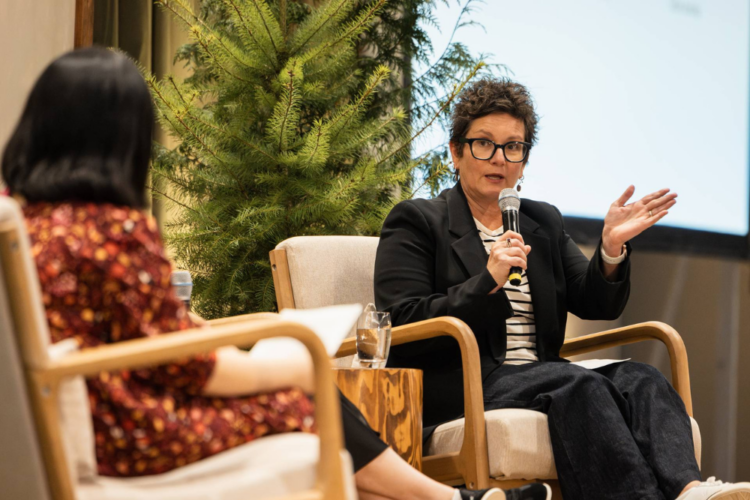
Cotton Australia was in Vancouver in October for the Textile Exchange Conference, one of the most important dates on the global sustainable fibre calendar. Around 1,200 delegates attended in person, with more than 200 joining online. This included brands, retailers, manufacturers, policy makers, certification programs and fibre producers from all around the world to come together and discuss how the industry turns sustainability commitments into practice.
Brooke Summers, Cotton Australia’s Manager of Strategic Projects (consultant), joined a panel on the value of supply chain traceability alongside a major UK retailer and a textile manufacturer. She outlined how the Australian cotton industry is strengthening traceability and on-farm practices, and what it takes to make these systems durable and credible. Her message was clear:
- Growers are being asked to collect and share more data, with no extra return per bale, and this has to change.
- Brands are paying more for sustainable products, but those premiums aren’t reaching farmers.
- Traceability is personal. For growers, it means revealing where their families live and work and grower privacy must be respected.
- Grower data must be protected under established codes, such as Australia’s Farm Data Code.
- Farm data needs local context and education to ensure it is used appropriately.

Brooke also took part in a Better Cotton Initiative workshop on regenerative cotton, as the organisation’s new regenerative standard was launched. Participants discussed the important elements of regenerative projects, with Brooke stressing that brands need to signal demand early and build premiums in from the start, if they want growers to take part.
Meetings with Textile Exchange and cotton programs including the U.S Cotton Trust Protocol, Organic Cotton Accelerator, BCI, Cotton Connect and others made one thing obvious. Growers around the world face the same pressures: more paperwork, more data requests and rising certification costs, without a clear financial benefit. The programs have agreed to meet more regularly and work together on these shared challenges.
Why participation matters for growers
- Getting recognised for what you already do. The new myBMP is being re-designed to ensure continued value for growers and better alignment with global standards, so Australian growers’ practices are recognised and rewarded, without duplicating effort.
- Getting ahead of regulation. New European legislation on traceability, supply chain due diligence, product data, traceability and environmental claims is coming. Cotton Australia is working to ensure our programs will protect our premium market position into the future.
- Working in partnership. Cotton Australia is building partnerships with organisations like Textile Exchange and the Better Cotton Initiative to deliver more opportunities for growers, while avoiding duplicated investment in systems such as traceability.
- Connecting with buyers. Several brands and retailers expressed strong interest in Australian cotton and the myBMP program. Some will be invited to Camp Cotton to see Australian farming first-hand.
The message Cotton Australia took to Vancouver was simple. If customers expect more from our growers, the value has to flow back to the farm. The Australian Cotton Strategic Roadmap is about exactly that, trying to build for the future without over-investing while finding new ways to reward growers for their credentials.
November, 2026.